

A deep dive for women who want to understand what’s actually happening in their bodies — and why it matters.
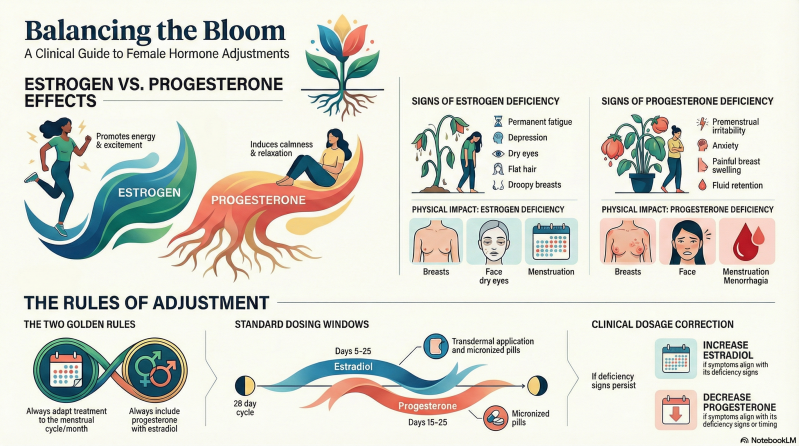
If estrogen gets all the headlines in menopause conversations, progesterone is quietly doing some of the most important work of your hormonal life — and getting almost none of the credit. That changes today.
Whether you’re in your late 30s noticing changes in your cycle, navigating perimenopause, or wondering whether your hormone therapy includes the right type of progestogen, this post is for you. Let’s get into it.
What Is Progesterone, Really?
Progesterone is a steroid hormone produced primarily by the corpus luteum — the temporary structure that forms in your ovary after ovulation. During pregnancy, the placenta takes over production. Your adrenal glands also make small amounts, as does the brain.
Progesterone belongs to the progestogen family, which also includes synthetic compounds called progestins (like medroxyprogesterone acetate, norethindrone, and levonorgestrel). These are not the same thing as bioidentical progesterone, and the distinction matters clinically — more on that below.
Progesterone: The Hormone You’re Not Thinking About Enough
Reproductive years: Progesterone rises sharply after ovulation, during the luteal phase of your cycle, then drops if pregnancy doesn’t occur — triggering your period. If you’re not ovulating (common in perimenopause, thyroid disorders, PCOS, high stress, or low body weight), you’re not making significant progesterone, regardless of what your estrogen is doing.
Perimenopause: This is the stage most people miss. Progesterone declines before estrogen does. As ovulation becomes irregular and eventually ceases, progesterone production drops precipitously. Meanwhile estrogen can swing wildly — sometimes high, sometimes low, but often with that characteristic progesterone foundation gone. This is the hormonal context behind many of the early perimenopausal symptoms: disrupted sleep, anxiety, heavy or irregular periods, and breast tenderness.
Menopause and beyond: Once ovulation has stopped completely, endogenous progesterone production is negligible. At this point, progesterone is only relevant if you’re taking it exogenously — and if you have a uterus and are taking estrogen, you need it.
What Does Progesterone Actually Do?
Far more than protect the uterine lining. Here’s the full picture:
Uterine protection: Progesterone opposes estrogen’s proliferative effects on the endometrium. Without adequate progestogen, unopposed estrogen stimulates endometrial growth and raises the risk of endometrial hyperplasia and cancer. This is why any woman with a uterus taking systemic estrogen must also take a progestogen.
Sleep: Progesterone metabolizes into allopregnanolone, a neuroactive steroid that acts on GABA-A receptors — the same receptors targeted by benzodiazepines and alcohol. Allopregnanolone is sedating and anxiolytic. This is one of the primary reasons progesterone has sleep-promoting effects, and why declining progesterone in perimenopause often shows up first as difficulty falling or staying asleep.
Mood and anxiety: Through that same GABA-A mechanism, progesterone (via allopregnanolone) has anxiolytic and mood-stabilizing properties. The anxiety, irritability, and emotional lability many women experience in perimenopause is partly a progesterone story.
Breast tissue: Progesterone’s role in breast tissue is complex and still debated. In contrast to synthetic progestins, bioidentical progesterone appears to have a more neutral — or possibly protective — effect on breast tissue. This distinction is at the heart of the ongoing conversation about breast cancer risk in hormone therapy.
Bone: Progesterone has some independent effects on bone formation, though estrogen is the dominant player in bone protection.
Thyroid: Progesterone can increase sensitivity to thyroid hormone, and low progesterone states can make thyroid symptoms more pronounced — one of the reasons thyroid and sex hormone status should often be evaluated together.
Cardiovascular: Progesterone affects vascular tone and has generally neutral to favorable effects on cardiovascular risk when used as micronized progesterone (as opposed to some synthetic progestins).
Bioidentical Progesterone vs. Synthetic Progestins: Why It Matters
This is one of the most clinically important distinctions in hormone care, and it's frequently glossed over.
Bioidentical (micronized) progesterone — sold as Prometrium in the US — is chemically identical to the progesterone your body produces. It's derived from plant sources (typically yams or soy) and processed into a molecule that is structurally indistinguishable from endogenous progesterone.
Synthetic progestins were developed in part because natural progesterone has poor oral bioavailability and a short half-life. Progestins are modified to be more potent and longer-acting, but this modification also means they interact differently with progesterone receptors — and sometimes with androgen, glucocorticoid, or mineralocorticoid receptors as well. Different progestins have very different receptor profiles.
Why does this matter clinically?
The landmark Women's Health Initiative (WHI) used medroxyprogesterone acetate (MPA), a synthetic progestin with significant glucocorticoid and androgenic activity, combined with conjugated equine estrogen. The increased breast cancer signal that generated so much fear was driven in part by the MPA, not the estrogen alone. The estrogen-only arm (for women who had undergone hysterectomy) actually showed a reduced risk of breast cancer.
Subsequent data — including the E3N cohort study from France — found that women using estradiol combined with oral micronized progesterone had no significant increase in breast cancer risk, while those using estradiol with synthetic progestins did. This is not a settled debate, but it significantly informs clinical decision-making for many providers.
Additionally, micronized progesterone preserves estrogen's favorable effects on HDL cholesterol better than MPA, and the GABA-A mediated sleep and anxiolytic benefits require the allopregnanolone metabolite — which only comes from bioidentical progesterone, not from synthetic progestins.
Low Progesterone: How to Recognize It
Low progesterone rarely announces itself with a lab result. Many women have normal-range progesterone on paper (especially if tested at the wrong time in the cycle) but still have relative progesterone deficiency — meaning their progesterone-to-estrogen ratio is off, often with estrogen dominance.
Clinical signs that may point to low progesterone:
- Heavy or irregular periods
- Worsening PMS or PMDD
- New-onset anxiety or mood instability, especially in the second half of the cycle
- Sleep disruption — difficulty falling asleep or staying asleep, vivid dreams
- Breast tenderness, especially premenstrually
- Spotting between periods
- Fibroids or endometriosis worsening
Lab timing matters: Progesterone should be measured on day 21 of a 28-day cycle (or 7 days before expected menses). A mid-luteal progesterone ≥ 10 ng/mL suggests ovulation occurred. Results below 3 ng/mL in the mid-luteal phase suggest anovulatory or oligoovulatory cycles. Saliva and dried urine testing is available but has significant limitations for clinical decision-making; serum remains the standard.
Progesterone in Hormone Therapy: Dosing and Delivery
For women on systemic estrogen therapy with an intact uterus, progestogen is non-negotiable for endometrial protection.
Oral micronized progesterone (Prometrium): The most commonly used form. Standard dosing is 200 mg nightly for 12–14 days per month (cyclic) or 100 mg nightly continuously. The oral route produces the allopregnanolone metabolite that supports sleep — many patients find 100 mg at bedtime significantly improves sleep quality. The main downside is first-pass hepatic metabolism, which limits systemic progesterone levels.
Vaginal progesterone: Higher local uterine concentrations with lower systemic levels. Used more commonly in fertility protocols; less commonly used in menopausal HRT in the US but relevant for patients who don't tolerate oral progesterone.
Compounded progesterone (topical/transdermal): Controversial. Transdermal progesterone cream has poor absorption and does not achieve reliable serum or endometrial concentrations. The Endocrine Society and NAMS do not recommend compounded transdermal progesterone for endometrial protection. For women who truly cannot tolerate oral progesterone and prefer not to use a synthetic progestin, this is a nuanced conversation worth having — but the evidence base is weak.
Levonorgestrel IUD (Mirena): Delivers progestogen locally to the endometrium with minimal systemic absorption. An excellent option for perimenopausal women who need contraception and endometrial protection. Can be used with systemic estrogen therapy in menopause; emerging data supports its adequacy for endometrial protection in this context, though it's not yet a primary recommendation from all major societies.
Special Considerations
Progesterone sensitivity: Some women experience significant sedation, dizziness, or mood changes with oral progesterone. Taking it at bedtime often helps. Dose reduction (from 200 mg to 100 mg continuous dosing) may be appropriate depending on uterine protection adequacy. Women who genuinely cannot tolerate oral micronized progesterone may need to consider a low-androgenic synthetic progestin — the clinical tradeoffs should be discussed openly.
Peanut allergy: Prometrium capsules contain peanut oil. For women with peanut allergies, compounded micronized progesterone in an alternative vehicle is needed.
PMDD: Emerging research is looking at the role of allopregnanolone sensitivity (not just levels) in PMDD. Some women with PMDD have paradoxical negative responses to progesterone — the allopregnanolone metabolite triggers, rather than soothes, dysphoric symptoms. This is an area of active research.
Progesterone after hysterectomy: Women who have had a hysterectomy do not require a progestogen for endometrial protection. They can use estrogen alone. Whether progesterone offers additional benefits (sleep, mood, neuroprotection) independent of uterine protection is a reasonable clinical question — but it's not the standard of care to routinely add it post-hysterectomy.
The Bottom Line
Progesterone is not just a uterine protector. It's a neuroactive, sleep-promoting, mood-modulating, anxiety-reducing hormone that many women start losing in their late 30s — often before they ever notice estrogen shifting. Understanding this timeline changes how we counsel patients about early perimenopausal symptoms and when to intervene.
The distinction between bioidentical micronized progesterone and synthetic progestins is clinically meaningful and should be part of every hormone therapy conversation. And for women experiencing unexplained anxiety, sleep disruption, or mood changes — especially in the luteal phase of their cycle — progesterone is frequently an underappreciated piece of the puzzle.
This post is for educational purposes and does not constitute individualized medical advice.
References & Further Reading
- NAMS 2022 Hormone Therapy Position Statement
- Fournier A et al., Breast Cancer Risk in Relation to Different Types of Hormone Replacement Therapy in the E3N-EPIC Cohort. Int J Cancer. 2005.
- Stanczyk FZ et al., Progestogens used in postmenopausal hormone therapy: Differences in their pharmacological properties, intracellular actions, and clinical effects. Endocrine Reviews. 2013.
- Prior JC. Progesterone as a bone-trophic hormone. Endocrine Reviews. 1990.
- Bäckström T et al., Allopregnanolone and mood disorders. Progress in Neurobiology. 2011.