

"Estradiol patches offer steady, skin-absorbed hormone delivery — helping to ease menopause symptoms without the peaks and troughs of oral tablets."
If your doctor has recommended hormone replacement therapy (HRT) and you've been prescribed an estradiol patch, you might be wondering exactly how they work, where to put them, and what to expect. You're not alone — estradiol patches are one of the most commonly prescribed forms of HRT, and understanding how to use them correctly makes a real difference to their effectiveness.
In this guide, we'll walk you through everything: what estradiol patches are, which types are available, step-by-step application instructions, recommended placement sites, how often to change them, and answers to the most common questions women ask.
Important This article is for informational purposes only. Always follow your prescriber's specific instructions for your patch brand and dose. If you have questions about your HRT, speak with your doctor or a menopause specialist.
What Are Estradiol Patches?
An estradiol patch is a small, discreet, adhesive patch worn on the skin that delivers a steady, controlled dose of estradiol — the primary form of oestrogen produced by the ovaries — directly into the bloodstream through the skin (known as transdermal delivery).
Unlike oral HRT tablets, which are processed through the liver before entering the bloodstream, patches bypass this "first-pass metabolism." This means:
- More consistent hormone levels throughout the day
- A lower dose of oestrogen is needed to achieve the same effect
- A potentially lower risk of blood clots compared to oral oestrogen (though your doctor will advise based on your individual health history)
- Less impact on liver function markers and blood pressure
Estradiol patches are used to manage symptoms of menopause and perimenopause, including hot flushes, night sweats, vaginal dryness, mood changes, sleep disturbance, and brain fog. They may also be prescribed following a surgical menopause (after oophorectomy).
Types of Estradiol Patches
There are two main types of estradiol patches, and your pharmacist will tell you which you have:
Matrix (Drug-in-Adhesive) Patches
The most modern type. The oestrogen is embedded directly within the adhesive layer, making these thin, virtually invisible, and discreet. Examples include Evorel, Estradot, and Vivelle-Dot. These tend to be smaller and more comfortable for everyday wear.
Reservoir Patches
An older design where the hormone is stored in a gel reservoir between layers of film, surrounded by a separate adhesive ring. Examples include Estraderm TTS. These tend to be slightly thicker and larger, but are still widely used and effective.
Your brand will also specify the dose (measured in micrograms per 24 hours — e.g. 25mcg, 50mcg, 75mcg, or 100mcg) and the change frequency (usually twice a week or once a week).
How to Apply Your Estradiol Patch: Step-by-Step
Applying your patch correctly ensures it delivers a consistent dose and stays in place.
Follow these steps every time you change your patch:
Choose the Right Moment
Apply your patch after a bath or shower once your skin is completely dry. Wait at least 30–60 minutes after bathing before applying. Applying to freshly bathed, dry skin gives the best adhesion.
Select Your Skin Site
Choose a clean, dry, hair-free area below the waist — see the placement guide below for recommended sites. Avoid placing the patch on areas with broken, irritated, or oily skin, skin folds, or directly on the same spot as your last patch.
Prepare the Skin
Do not apply any lotions, oils, creams, or powder to the skin where the patch will be placed. These create a barrier that prevents proper absorption. If needed, clean the area with a gentle soap and allow it to dry fully — no rubbing with alcohol (which can irritate the skin and affect adhesion).
Open the Sachet & Remove the Backing
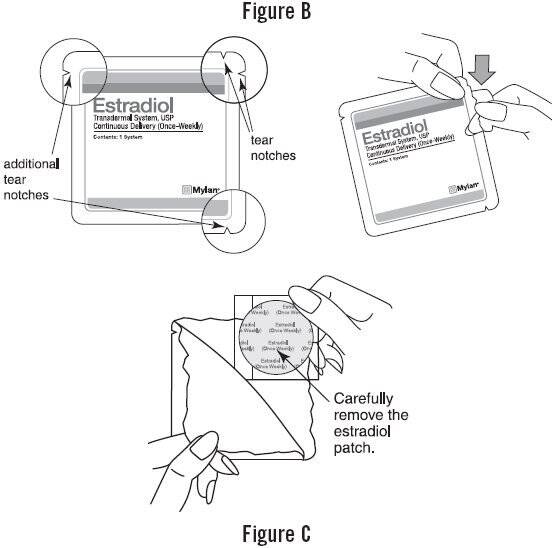
Tear open the foil sachet carefully. Remove the patch and peel back the protective backing — for most patches, this comes in two halves. Hold the patch by its edges, being careful not to touch the adhesive surface, as oils from your fingers can reduce stickiness.
Apply the Patch Firmly
Press the sticky side firmly onto your skin. Use the palm of your hand to press over the patch for at least 10–15 seconds. Pay special attention to the edges, as these are the most likely to lift. Make sure there are no creases or air bubbles under the patch.
Note the Application Date & Time
Mark your change day on a calendar, phone app, or the patch packet itself. Knowing when to change it helps maintain consistent hormone levels. Most patches are changed twice weekly (e.g. Monday and Thursday) or once weekly — your prescription will specify.
Dispose of the Used Patch Safely
When removing your old patch, fold it in half so the sticky sides face each other. Wrap it in the original sachet or household foil and place it in your household waste — never flush it down the toilet, as this can affect water quality. Used patches still contain some oestrogen, so keep them away from children and pets.
Where to Apply Your Estradiol Patch
Patch placement matters more than most people realise. The skin on different body areas absorbs medication at different rates, and certain sites are more prone to irritation or poor adhesion. Your patch should always be applied below the waist, to the lower body.
Lower Abdomen
Below the navel and above the bikini line. Avoid the waistband area. One of the most recommended sites for consistency and comfort.
Buttocks
The outer upper buttock area. Good skin thickness and minimal movement make this a reliable site. Avoid the central crease.
Outer Upper Thigh
The outer side of the thigh, away from the inner thigh (which is prone to friction and sweating). Make sure it won't be rubbed by clothing.
Hip / Flank
The side of the hip below the waistline is a useful alternative, especially if the abdomen or buttocks are irritated. Ensure skin is flat and clean.
Sites to Avoid Never apply your patch to: the breasts, under the arms, on the waist (waistband causes friction and poor adhesion), the inner thigh or groin, skin that is broken, sunburnt, inflamed or irritated, skin over bony areas or joints, or to the same spot as your previous patch.
Rotation is Essential
Each time you apply a new patch, rotate to a different area to allow the previous site to recover. For example, apply Monday's patch to your lower left abdomen, Thursday's patch to your lower right abdomen or left buttock, and so on. A simple rotation schedule reduces local skin irritation significantly.
When and How Often to Change Your Patch
Most estradiol patches are changed either twice weekly or once weekly — your prescription leaflet will specify. The most common schedule is twice weekly (every 3–4 days). Consistency matters: changing too early or too late can lead to fluctuating hormone levels and a return of symptoms.
Practical Tips for Remembering Your Change Days Set a phone alarm labelled "Patch Day" on your two designated days each week. Some women pick days that rhyme with their schedule — for example, every Monday and Thursday. Keep your patches in a visible location (e.g. beside your skincare) so you don't forget.
What If My Patch Falls Off? If your patch partially detaches, try pressing it back down firmly. If it has fully come off and has been off for less than a few hours, replace it with a new patch and continue your usual change schedule. If it has been off for a significant portion of the wear period, apply a new patch and speak to your pharmacist or prescriber about whether you need to adjust your schedule. Never apply two patches at once unless specifically directed by your doctor.
Bathing, Swimming & Exercise
Most modern matrix patches are designed to be water-resistant and will stay in place through bathing, showering, and swimming. However, long soaks in very hot baths, steam rooms, saunas, and hot tubs can cause patches to lift or absorb more quickly than intended — ideally, avoid prolonged exposure of the patch to extreme heat or steam.
Exercise is fine — including sport, running, and yoga — though high-sweat activities may occasionally cause the edges to lift. Patting the area dry after exercise and re-pressing the edges can help.
Possible Side Effects & Skin Reactions
Some women experience mild skin reactions at the patch site, including temporary redness, itching, or a faint mark where the patch was. These are common and usually resolve within a few hours of removal. Rotating sites and ensuring skin is completely clean before application helps reduce this.
If you experience a persistent rash, significant skin irritation, or a raised welt that doesn't settle, let your prescriber know — this may indicate a sensitivity to the adhesive or the active ingredient, and an alternative patch brand or formulation may be better tolerated.
Other potential effects to discuss with your doctor include: breast tenderness, bloating, headaches, nausea, or spotting (particularly in the early weeks of starting HRT). Most of these settle as your body adjusts. If symptoms persist beyond 3 months, your dose may need reviewing.
When to Contact Your Doctor Seek advice promptly if you notice: unexplained vaginal bleeding, severe headache, visual disturbances, chest pain, swelling in one leg, or shortness of breath. While rare, these can indicate complications that require assessment.
Frequently Asked Questions
How long does it take for the estradiol patch to work? Most women notice an improvement in hot flushes and night sweats within 2–4 weeks, with the full benefit typically achieved by 3 months. Some symptoms, such as vaginal dryness, may take a little longer to improve. Give your body time to adjust before asking your doctor to change your dose.
Can I use a patch if I still have a uterus? If you have a uterus and are using oestrogen-only HRT (including patches), you will also need to take a progestogen to protect the lining of the womb. This may be a separate tablet (like Utrogestan), a hormonal coil, or a combined patch. Never use oestrogen-only HRT without progestogen if you have a uterus, unless specifically advised by your doctor.
Can I apply the patch to my arm or back? Most manufacturers and clinical guidelines recommend applying patches below the waist only, as this is where absorption rates have been studied and standardised. Applying to other areas may alter absorption and effectiveness. Always follow the instructions for your specific brand.
What's the difference between a patch and a gel? Both are transdermal forms of oestrogen. Gel (such as Oestrogel or Sandrena) is applied daily and rubbed into the skin, while patches are changed once or twice weekly. Both are equally effective when used correctly. Some women prefer the simplicity of a patch (less frequent application), while others prefer gel if they have skin sensitivities to adhesive.
Can I use a heat pad or hot water bottle over my patch? No — this is not recommended. Heat increases blood flow to the skin and can significantly increase the rate at which estrogen is absorbed, leading to higher-than-intended hormone levels. Avoid electric blankets, heat pads, saunas, and very hot baths directly over the patch site.
What if I forget to change my patch on the right day? Change it as soon as you remember, then resume your original change days if possible. If you're close to your next scheduled change, apply a new patch at your usual time and continue. Speak to your pharmacist if you're unsure — missing a change occasionally is unlikely to cause harm, but consistency is important for optimal symptom control.
Medical Disclaimer: The information in this article is intended for general informational purposes only and does not constitute medical advice. It is not a substitute for professional medical advice, diagnosis, or treatment. Always seek the advice of your doctor, pharmacist, or menopause specialist with any questions you may have regarding your HRT prescription or health condition. Never disregard professional medical advice or delay seeking it because of something you have read here.